On the first ninety-five degree weekend of the summer, the typical Kernersville HVAC company misses a large share of its inbound calls. Voicemails go cold. By Monday morning, the homeowner has already booked a competitor who answered the phone at nine at night on Saturday. That gap is no longer a staffing problem. It is a solved problem, and the solution is an AI voice agent.
What an AI Voice Agent Actually Does for HVAC
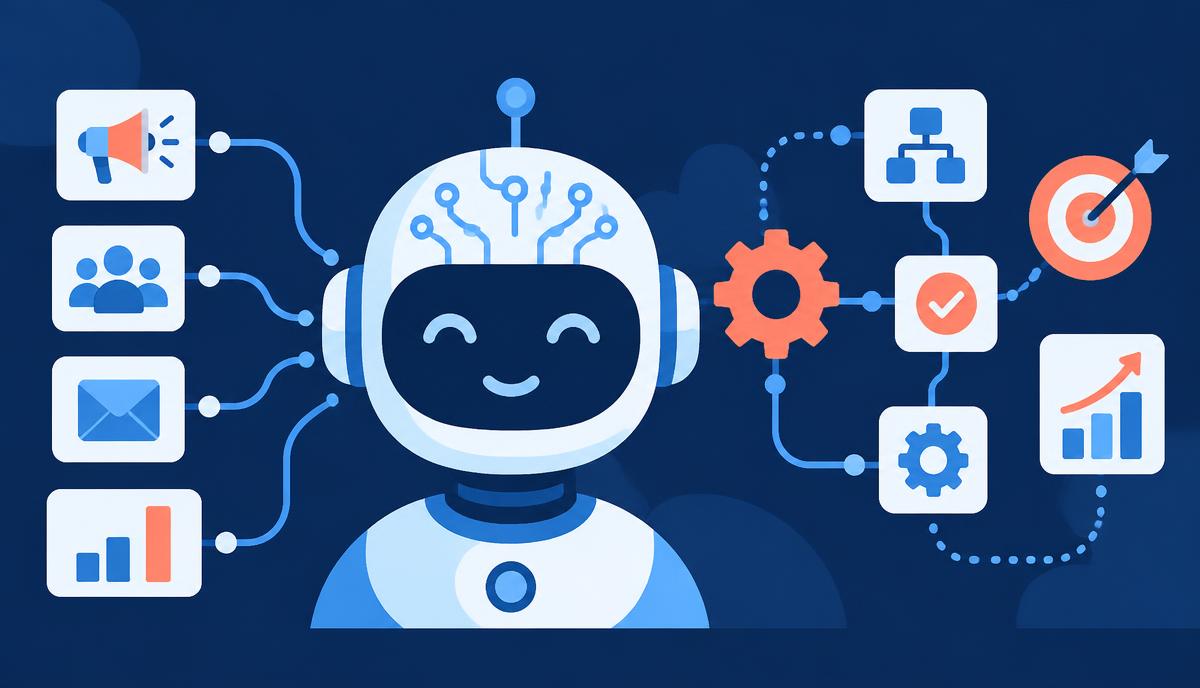
An AI voice agent is a phone answering system that uses a natural sounding voice model to pick up calls, qualify the caller, schedule the appointment, and hand off only true emergencies to a human technician. For a Kernersville HVAC company, that means every after hours call, every overflow call during the morning rush, and every call that would have rolled to voicemail is answered, captured in the CRM, and either booked or escalated.
The technology crossed the believability threshold in the past couple of years. Homeowners cannot reliably tell they are talking to AI on a ninety second service call. They care about one thing: someone picked up and they have an appointment.
The Real Cost of Missed Calls
Run the math on a typical Kernersville HVAC business doing several million dollars in annual revenue. Average ticket ranges from a modest service call to a five figure system replacement. Call tracking data across HVAC accounts shows that a substantial share of inbound calls outside of normal business hours hit voicemail, and most of those callers never call back. Even at conservative estimates, that adds up to a meaningful number of lost service opportunities and lost system replacements every year, and the annual revenue leak from that gap routinely runs into six figures for a single company. That is not a marketing problem dressed up as a phone problem. It is a phone problem dressed up as a marketing problem.
The Four Things a Voice Agent Must Do
- Pick up on the first ring, 24/7, with a warm greeting that identifies the company by name and asks how it can help.
- Qualify the call in under ninety seconds, capturing system type, age, symptom, address, urgency, and service plan status structured into the CRM.
- Book the appointment live by pulling the next available slot from the dispatch calendar, confirming the window, and sending a text confirmation before hanging up.
- Escalate true emergencies such as no heat in winter, no air conditioning above ninety degrees, gas smell, or a water leak by paging the on call technician immediately.
Why Generic AI Answering Services Fail HVAC
Most owners try a generic answering service first, get burned, and conclude AI is not ready. The actual failure is the configuration. A generic agent does not know that an older system in a specific Kernersville neighborhood is a common replacement candidate, or that "the upstairs is not cooling" on a ninety-two degree day means same day dispatch while a thermostat question is a routine Tuesday slot.
A voice agent that actually works is trained on the company's own call recordings, the local equipment mix, neighborhood patterns, and the dispatcher's real booking rules. That is a real implementation project, not a weekend setup.
The Integration Stack That Makes It Work
A working voice agent sits inside four systems: the call routing layer, the AI voice platform itself, the field service software, and the call tracking layer that ties every captured call back to its original marketing source. That last piece is what most installations miss. Without source attribution, a company cannot tell whether the voice agent saved a paid search lead, a local service ad lead, or an organic call. With it, cost per booked job from each channel becomes legible for the first time.
What This Costs and What It Returns
Implementation for an HVAC company typically involves a setup investment followed by a modest monthly cost that scales with call volume and integration depth. Payback windows in real deployments run days to a few weeks, not months. That is not because the technology is cheap. It is because the missed call leak is large and was previously invisible.
Common Mistakes Owners Make
- Hiding the AI from the customer aggressively and then transferring every call to a human anyway, which defeats the point.
- Refusing to give the agent access to the live dispatch calendar, which forces every booking into a follow up call.
- Treating the agent as a permanent replacement for a customer service representative, when the right model is the agent handling overflow and after hours while a trained human owns the morning rush and complex sales conversations.
Working with a performance marketing agency that has shipped this exact stack for other HVAC contractors saves months of trial and error that a solo deployment usually goes through. Our case studies walk through what a full rollout looks like from first call to first month of data.
How the Rollout Actually Happens
A realistic rollout starts with pulling a sample of recent call recordings to understand the actual mix of emergency, maintenance, and sales calls the business receives. From there, the agent is scripted around the company's real booking rules and connected to the dispatch calendar so appointments confirm live. A short pilot period runs the agent in parallel with the human team so any gaps in qualification logic get caught before the agent handles calls unsupervised. Most companies are fully live within a month.
Measuring Whether It Is Working
The clearest signal is the missed call rate before and after deployment, tracked weekly. A close second is booking rate on captured calls, since a voice agent that answers but fails to book is only solving half the problem. Revenue booked from after hours and overflow calls should be tracked as its own line so the impact does not get buried inside overall monthly revenue.
Where to Start This Month
Pull your call logs for the last ninety days and count how many calls arrived outside business hours or during your busiest weekday windows. That single number usually makes the case for a pilot before any vendor conversation begins. If you want help running that analysis, our team can walk through it with you.
Ready to stop losing after hours HVAC calls
Book a call and we will audit your current call capture rate, model the recoverable revenue, and map the AI voice agent stack your Kernersville HVAC business needs to close the leak.
Book a Free Strategy Call