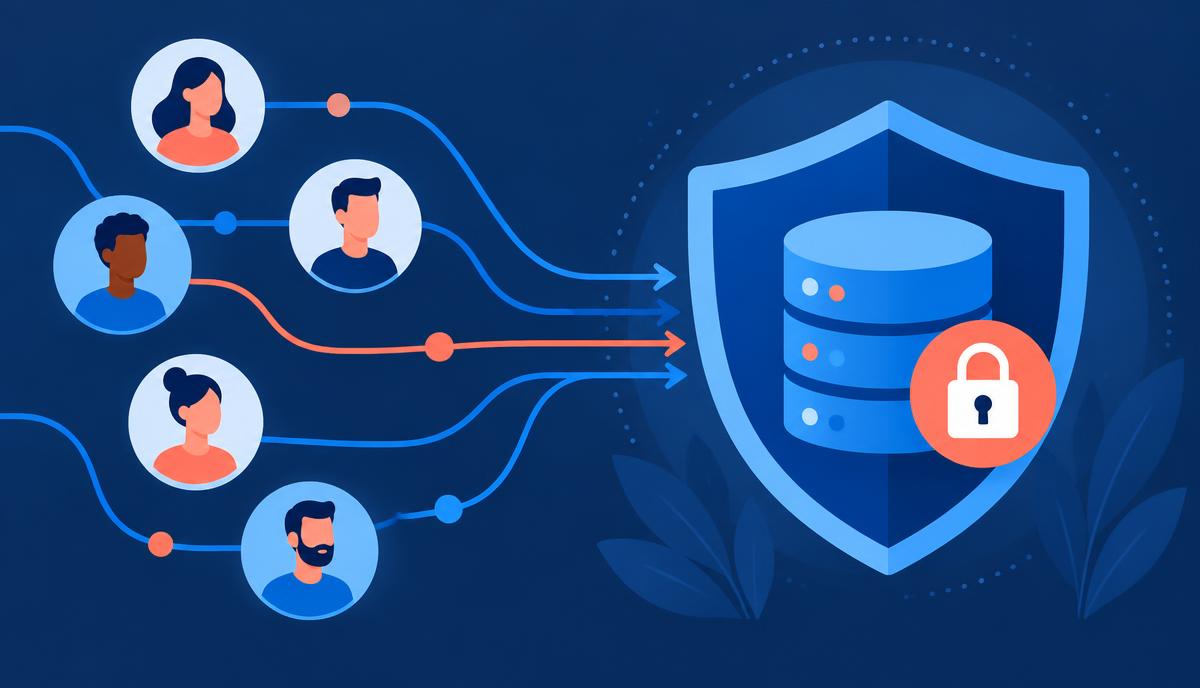
There is a version of personalization that makes an Asheboro customer feel recognised, and a version that makes them feel watched. The difference is not the technology. It is whether the data came from a conversation they took part in.
The line between helpful and unsettling
Privacy-compliant personalization is tailoring based on consented, first-party information. A heating company in Asheboro emailing a customer about their furnace because that customer bought the furnace from them is helpful. The same email triggered by third-party browsing data the customer never knowingly shared is the kind of thing that ends relationships.
A useful test before shipping any rule: if the customer asked how you knew, would the answer be comfortable to give? If the honest answer is that you bought the information, do not ship it.
The data you can use confidently
- Declared information. Anything typed into your forms, including service needs, property details, and contact preferences.
- Transaction history. What you sold them, when, and at what value.
- On-site behaviour. Pages viewed on your own domain during the current or a previous session.
- Service context. Equipment installed, warranty dates, and maintenance schedules from your own records.
- Explicit preferences. Frequency, channel, and topic choices they set themselves.
Everything an Asheboro service business genuinely needs sits in that list. Purchased audience data adds risk and very little accuracy at local scale.
Rules that produce results
Service-based email segmentation
Segment your list by what the customer actually bought. An Asheboro landscaping company sending irrigation content to hardscape-only customers trains people to ignore its email. Segmenting by service line usually improves open rates and reduces unsubscribes at the same time, which is unusual for any change.
Lifecycle timing
Timing is a form of personalization. A maintenance reminder sent eleven months after installation lands as a service, while the same message sent randomly lands as a promotion. Build the calendar from your own job records.
Return-visit relevance
If someone has read your commercial pages twice, show commercial proof and a commercial contact path on the next visit. This uses only what happened on your own site and requires no identity at all.
Geographic detail
Referencing Randolph County conditions, permitting, or seasonal patterns is relevant without being personal. It is also the kind of specificity national competitors cannot produce.
Governance a small business can actually run
- Keep an inventory. One page listing what you collect, where it lives, and why.
- Set retention limits. Delete inactive lead records after a defined period rather than never.
- Restrict access. Not everyone in the office needs the full customer database.
- Honour requests quickly. Deletion and access requests should have a named owner and a deadline.
- Review annually. Tools change, and forgotten integrations are where leaks happen.
This governance sits alongside the data foundations we build in lifecycle marketing programmes and the reporting structure described in our attribution service.
An Asheboro example
An Asheboro home services company had one email list and sent everyone the same monthly message. Splitting it into four groups by installed equipment, and timing each group's reminder to its own service interval, roughly doubled booked maintenance visits from email over the following year while the list itself grew more slowly than before.
No new data was purchased. The information had been in the job records the whole time.
Common mistakes
- Revealing the inference. Telling a visitor you noticed they viewed a page three times is unsettling, even when true.
- Assuming consent transfers. Permission to email is not permission to text.
- Mixing lists. Merging a purchased list into your own poisons deliverability for everyone on it.
- Personalizing with stale data. Addressing a customer about equipment they replaced two years ago undermines the whole exercise.
- No off switch. Every personalized programme needs an easy way out that works immediately.
Where to begin
Take your customer records and split them by service line. Send one genuinely useful, timed message to the largest group, measure response, then repeat. That single step delivers most of the value of personalization for an Asheboro service business, with none of the risk attached to buying data about people who never agreed to be tracked.
What this looks like in twelve months
An Asheboro business that commits to consented personalization ends the year with something more durable than a campaign. It has a segmented customer list, a service calendar driving contact timing, and a record of which messages produce bookings for which group.
- Marketing spend shifts toward existing customers, where acquisition cost is effectively zero.
- Email performance improves because relevance rose rather than because frequency did.
- Compliance requests are simple to answer, since the data inventory already exists.
- The business is less exposed to platform changes, because the relationship is direct.
None of that depends on buying information about people. It depends on treating the records you already hold as an asset worth organising, which is a decision available to any Asheboro business willing to spend a fortnight on it.
A 90 day sequence for an Asheboro business
- Days 1 to 30: build the one page data inventory and split the customer list by service line.
- Days 31 to 60: launch the first segmented email using declared service history, and set a retention rule for inactive records.
- Days 61 to 90: add lifecycle timing based on install or purchase dates, and measure open and response rates against the old, unsegmented list.
What to ask a vendor about personalization
- Ask exactly which data sources feed any recommendation or segmentation, and reject vague answers about proprietary algorithms.
- Ask how consent is recorded and whether it is honoured across every channel, not just email.
- Ask what happens to data when a customer asks for deletion, and how long that takes in practice.
- Ask whether the vendor is proposing to buy or append third party data, and treat that as a reason to slow down, not speed up.
Budget and staffing considerations
This work is mostly organizational rather than expensive. An Asheboro business needs someone to own the data inventory, someone to write the segmented messages, and a defined process for handling deletion requests. Most of that fits inside existing office roles for a business under a few hundred customers, and the main cost is the time spent organizing records that already exist rather than any new software purchase.
Want personalization your customers would approve of?
We will map the consented data your Asheboro business already holds and turn it into campaigns that feel like service rather than surveillance.
Book a Free Strategy Call