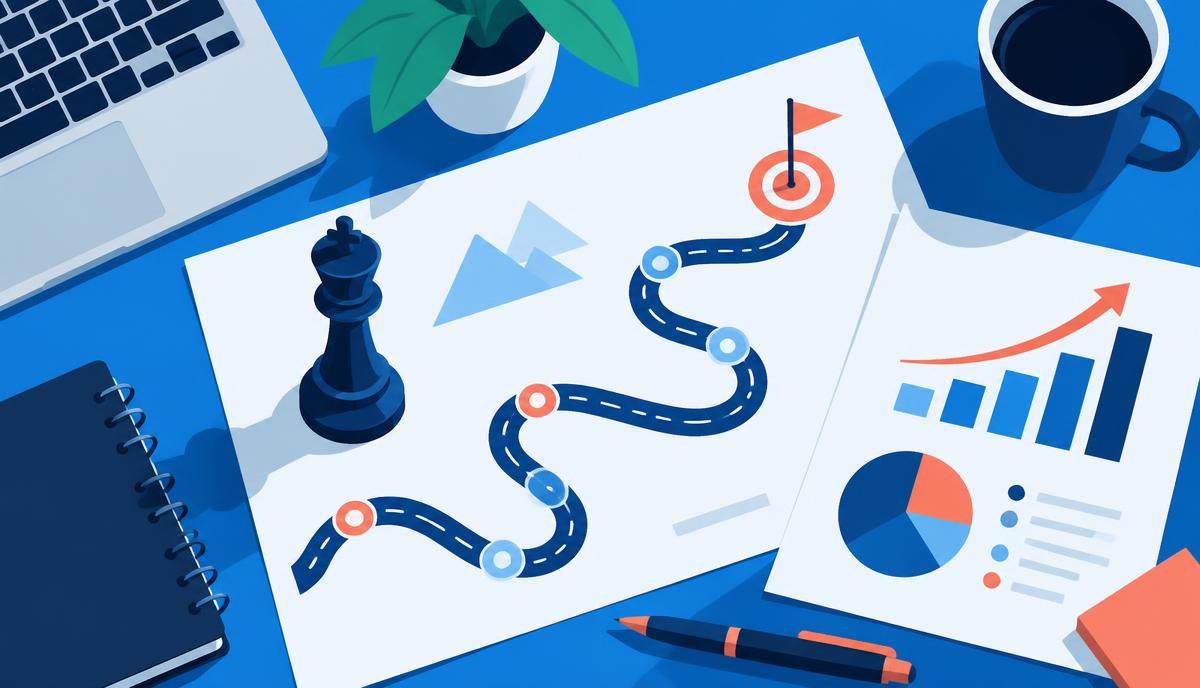
Most Kernersville service businesses treat their website like a digital business card. It lists services, shares a testimonial or two, and hopes a visitor eventually picks up the phone. A deliberately built funnel replaces that passive hope with a sequence that guides a stranger toward booking a consultation as the obvious next step.
Why a passive website leaves money on the table
The typical service business site makes three mistakes at once. There is no clear next step, so a visitor lands on the homepage and faces too many options at once. There is an immediate ask for a big commitment, which feels premature to someone who just discovered the business. And there is no value offered before that ask, so the visitor is being asked for their time before they have seen a reason to give it. A funnel fixes each of these by creating a logical progression that matches how a buyer actually thinks through a decision.
The five stage architecture
Every effective funnel for a higher ticket service follows roughly the same progression, even though the specific tactics vary by industry.
Stage one: getting the right traffic in the door
Before anything downstream matters, the funnel needs the right people entering it. Traffic source shapes everything that follows, including conversion rate and the quality of who eventually books. Higher intent sources such as organic search, referrals, and well targeted ads convert at a much higher rate than lower intent sources like broad social reach or cold outreach, so it is worth being deliberate about where budget goes before optimizing anything else.
Stage two: the landing page has one job
A landing page's only job is to convince a visitor to take one small next step, not to book a consultation immediately, which is too large an ask for someone who just arrived. A page that works addresses the specific problem the visitor was searching for, establishes credibility within the first few seconds, and offers a low commitment next step such as a download, a short quiz, or a simple calculator.
Stage three: the lead magnet exchange
This is where most funnels quietly fail. Businesses offer generic content that provides no real value and reads like it could have been written by anyone. An effective lead magnet is specific to the visitor's exact situation, immediately actionable even without hiring you, and clearly demonstrates the unique way you approach the problem.
Stage four: the nurture sequence
Someone downloaded the resource. Now the relationship has to build over a few touches rather than jumping straight to a pitch. A reasonable sequence includes immediate delivery of the promised resource, a handful of short educational messages that teach something useful on their own, relevant proof points from similar clients, and finally a genuine, low pressure invitation to have a conversation.
Stage five: making the booking itself frictionless
By the time someone reaches this stage, they should feel like they already know your business. Self scheduling, a short pre consultation questionnaire, and clear expectations about what happens on the call all reduce the last bit of friction that otherwise causes drop off right before the finish line.
Understanding the math behind funnel performance
Rough conversion benchmarks at each stage help identify where a specific funnel is actually breaking down. Landing pages built for high intent traffic typically convert a meaningful share of visitors into a lead. Email engagement rates vary widely by list quality. Only a portion of engaged leads request a consultation, and only a portion of consultations become clients depending on how well qualified they were going in. Running through a rough estimate at each stage, from a thousand visitors down to a handful of new clients, quickly shows where the biggest opportunity for improvement actually sits, and it is rarely at the very top of the funnel.
Mistakes worth avoiding beyond the big ask
- Neglecting the mobile experience, even though a majority of traffic for most Kernersville service businesses now arrives on a phone.
- Skipping retargeting entirely, when the large majority of visitors will not convert on their first visit no matter how well the funnel is designed.
- Treating the funnel as a one time build rather than something reviewed and adjusted as traffic sources and audience behavior shift.
Putting the pieces together
A well designed funnel turns a website from a passive brochure into an active lead generation system. It starts with knowing exactly who the audience is, offering something genuinely useful before asking for anything, and creating a clear path to the next small step at every stage. A revenue-focused marketing team that has built this kind of system before can help map the specific stages for your Kernersville business, and our service pricing page outlines what that build typically involves.
A short starting checklist
- Map your current visitor journey and identify where the biggest drop off actually happens.
- Build one genuinely useful lead magnet specific to your service, not a generic tip sheet.
- Write a five message nurture sequence that teaches before it pitches.
- Add a simple retargeting audience for anyone who has not yet converted.
A Worked Example Through the Funnel
Picture a Kernersville firm sending 1,000 monthly visitors to a landing page built around a specific lead magnet. A reasonable outcome might be 150 to 250 people opting in, of whom 20 to 40 percent engage meaningfully with the nurture sequence, of whom perhaps 10 to 20 percent request a consultation, and of whom roughly a third to half become clients depending on how well qualified they were. Running these rough numbers before building anything shows quickly where the real leverage sits, and for most funnels it is the opt-in rate and the nurture engagement rate, not the raw traffic volume, that determines whether the whole system produces enough consultations.
A 90 Day Build Sequence
- Days 1 to 30: map the current visitor journey, identify the biggest drop-off point, and draft one specific, genuinely useful lead magnet.
- Days 31 to 60: build the landing page and the five-message nurture sequence, and set up a simple retargeting audience for anyone who visits but does not convert.
- Days 61 to 90: review conversion rates at each stage against the rough benchmarks, adjust whichever stage is underperforming, and add self-scheduling to remove friction at the booking step.
Questions to Ask a Funnel Vendor
- Ask how they will measure conversion at each individual stage, not just the overall visitor-to-consultation rate.
- Ask whether the lead magnet they propose is genuinely specific to your service, or a template used across many different clients.
- Ask how the nurture sequence is written and whether it teaches something useful before it pitches.
- Ask how they plan to keep the funnel current as traffic sources and audience behavior shift over time.
Staffing and Ongoing Maintenance
A funnel is not a one-time build. Someone at the firm needs to own reviewing the stage-by-stage numbers monthly, refreshing the lead magnet periodically so it does not go stale, and adjusting the nurture sequence as the business's proof points and offers change. Even a modest amount of ongoing attention, an hour or two a month reviewing the numbers, keeps a funnel from quietly decaying the way many end up doing after the initial launch excitement fades.
Build your conversion machine
Our funnel design work turns Kernersville website traffic into booked consultations through a deliberate, staged approach. Reach out for a free funnel review.
Book a Free Strategy Call